0800 233 724 (toll-free)
 enquiries@online.cut.ac.za
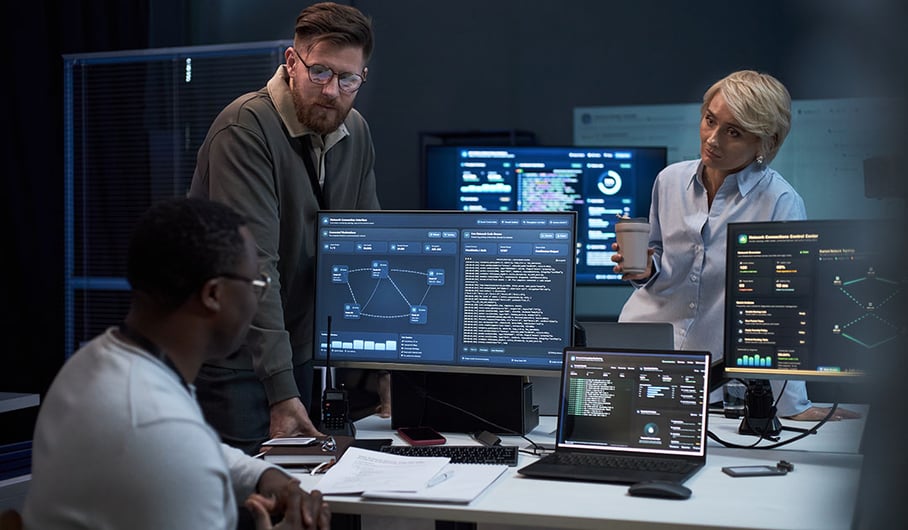
Technological advancements like artificial intelligence are causing massive disruption across many industries and placing many careers at risk, but they also bring opportunities. The World Economic Forum’s Future of Jobs Report 2025 identified broadening digital access as the dominant trend across global industries, further noting that technology-related roles are the fastest-growing jobs in percentage terms.
For professionals aiming to bridge the gap between technical execution and strategic leadership, a Postgraduate Diploma in Information Technology offers a reliable pathway for career progression. Whether you are looking to move into management or deepen your technical specialisation, understanding the application process is the first step toward your academic journey.
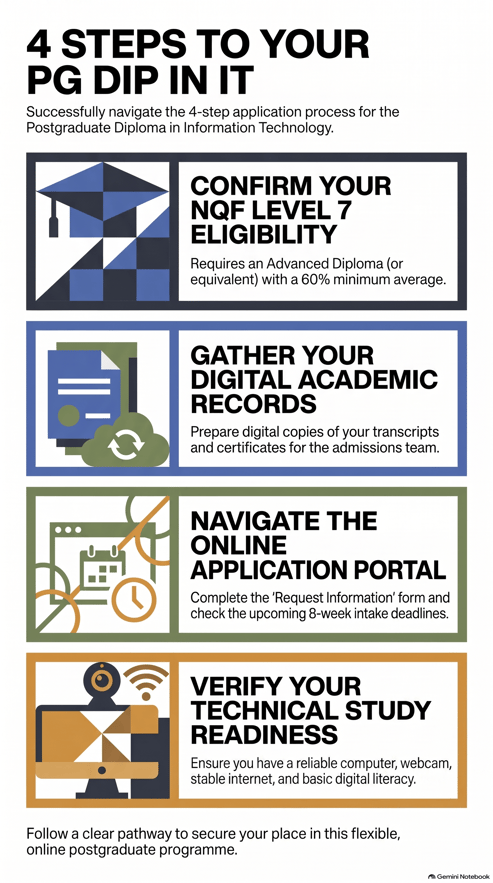
Step 1: Confirming Your Eligibility
Before beginning your application, you should verify that you meet the academic requirements. The Postgraduate Diploma in Information Technology is designed for those who already have some knowledge of the field. Typically, you will require an Advanced Diploma in Information Technology at NQF Level 7, or an equivalent qualification, with a minimum average of 60%. While your academic history is the main requirement, applicants with relevant work experience in the IT sector will be at an advantage.
Step 2: Preparing Your Documentation
The online application process is designed to be efficient, but it requires thorough preparation. Ensure you have digital copies of your academic transcripts and certificates. These documents are crucial for the admissions team to assess your readiness for postgraduate-level study. Because the programme is delivered in an online format, your application should also reflect a readiness for independent, digital learning.
Step 3: Navigating the Online Portal
The application process is managed entirely online. You can initiate the process by completing the Request Information form. The programme has multiple intake periods throughout the year, and you can view the next upcoming registration deadline on the programme page.
Step 4: Ensuring Technical Readiness
As a student of an online programme, your primary classroom is digital. Success in this qualification requires not only academic dedication but also the right tools. Before you commit to the programme, ensure you have:
- A reliable laptop or desktop computer with a working microphone and webcam.
- Consistent and stable internet connectivity to access lecture materials and participate in online engagements.
- Fundamental computer literacy to navigate the university’s online learning management systems effectively.
FAQs
1. What are the academic entry requirements for the Postgraduate Diploma in Information Technology?
To qualify for admission, you must hold an Advanced Diploma in Information Technology at NQF Level 7, or an equivalent qualification. Applicants are also generally expected to have maintained a minimum average of 60% in their previous studies.
2. Do I need to be currently employed in the IT industry to apply?
While the programme is ideally suited for working professionals, and relevant work experience is highly beneficial and considered an advantage during the selection process, it is not a strictly mandated requirement.
3. What technical equipment do I need to study online?
Since the programme is fully online, you are expected to have your own laptop or desktop computer. You must also have access to a reliable, high-speed internet connection to download course materials, participate in modules and engage with your lecturers and peers.
4. How can I find out about the next application deadline?
You can see the upcoming starting date and registration deadline on the Postgraduate Diploma in Information Technology page. The programme operates on an eight-week cycle, so you do not have to wait long for the next intake period if the current deadline is too short.
5. Is it possible to study while I work full-time?
Yes, the programme is specifically designed for working professionals. The asynchronous online delivery model offers the flexibility to engage with study materials at any time of day or night, allowing professionals to balance career responsibilities with academic goals. The modular structure, which breaks the curriculum into seven-week cycles, is designed to make the workload manageable for students in active employment.